Montbovon – Enney
Parc naturel régional Gruyère Pays-d'Enhaut - A journey through a peaceful valley
The hike from Montbovon to Enney is the perfect way to take in the beauty and history of the Intyamon Valley, from its traditional architecture and historic bridge to rivers and forests, not to mention farming landscapes and magnificent views of Les Vanils.
The route first follows the road to Lac de Lessoc and then continues along the lake's left shore to a unique site: no fewer than four road and rail bridges spanning the Hongrin river. A few hundred metres further on is another bridge. This one is made from wood, has a shingle roof and crosses a different river, the Sarine. After the forest is Lessoc, with its dense cluster of houses and farms and a lovely covered fountain in the village square.
The trail continues across some pastureland and along the edge of the forest to a grotto dedicated to Our Lady of Lourdes, and the small Taouna river which still powers the Grandvillard sawmill. After a walk through Grandvillard village, the path leads back to the tree-lined banks of the Sarine, across the river again, and finally to Enney's picture-perfect train station.

© Swiss Rando
Montbovon – Enney
Season
April, Mai, June, July, August, September, October, NovemberRoute-information
- Length
- 13.60 km
- Altitude difference ascent
- 290 m
- Altitude difference descent
- 370 m
- Level technique
- Easy
- Level condition
- Middle
Arrival
- Starting point
- Montbovon
- Arrival by public transport (stop/station)
- Montbovon Timetable SBB
- Destination
- Enney
- Arrival by public transport (stop/station)
- Enney Timetable SBB
Documents
The offer is suitable for
- Adults
Contact
Parc naturel régional Gruyère Pays-d'EnhautPlace du Village 6
1660 Château-d'Œx
Telephone +41 (0) 26 924 23 33
inscriptions@gruyerepaysdenhaut.ch
http://www.gruyerepaysdenhaut.ch
Montbovon – Enney
Montbovon – Enney
© Parc naturel régional Gruyère Pays-d’Enhaut
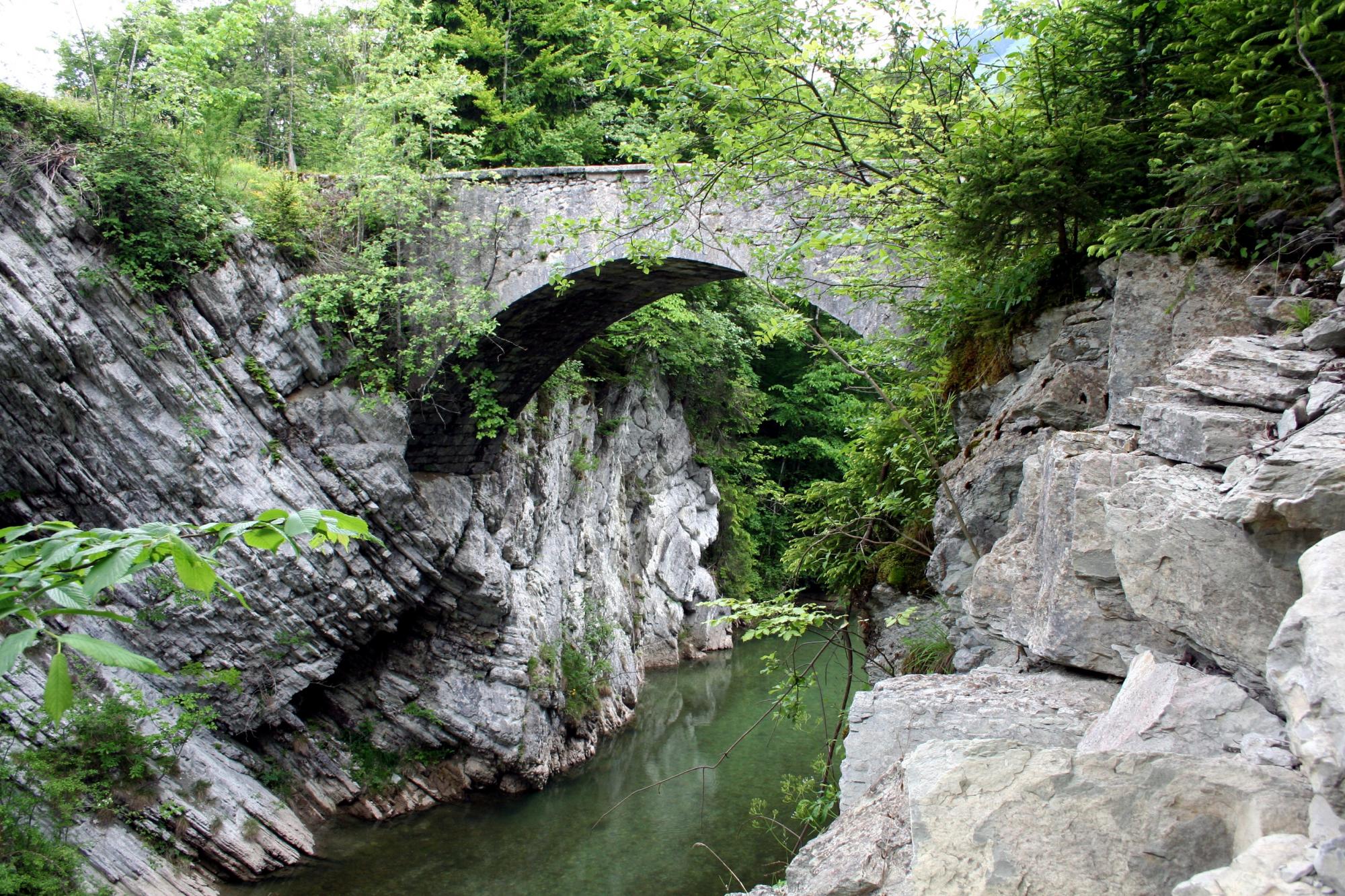
Bridges over the Hongrin
The Grand Chemin that leads to the Ancien Comté on the left bank of the Sarine meets the Hongrin River Gorge before the village of Montbovon. Three road bridges and one railroad bridge constructed during the last four centuries meet at this intersection. The oldest bridge of the group probably dates to the 17th century.
© Parc naturel régional Gruyère Pays-d’Enhaut
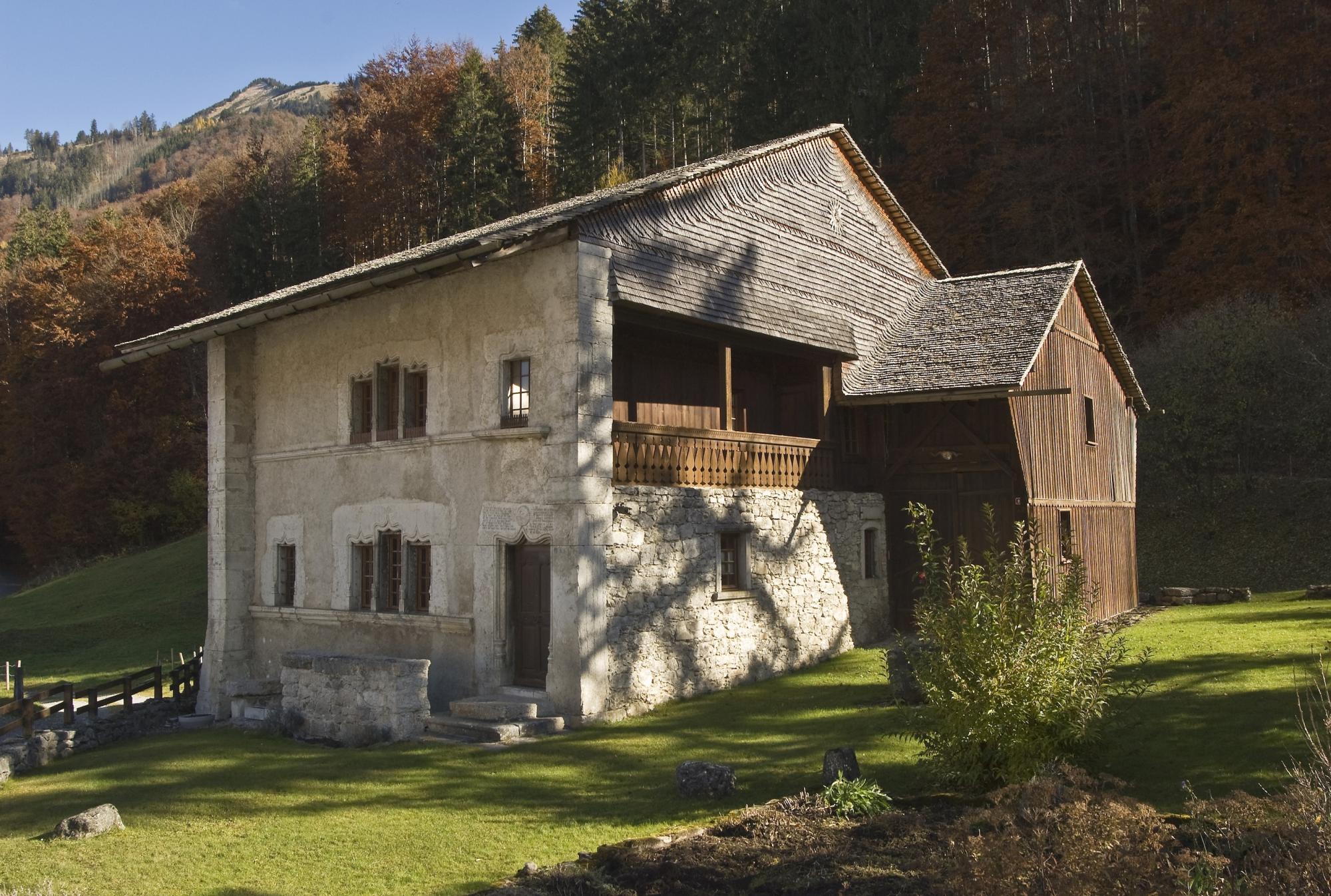
Grandvillard
Located on the right bank of the Sarine, a strong pastoral economy and highly developed cheese market contributed to the wealth of Grandvillard. The result is a strongly urbanized village of narrow streets, with many opulent-looking buildings, stone facades, and late gothic style window frames. Follow the marked walking path, to explore this remarkable group of historic homes and farms of national interest ( such as the exquisite 1666 Bannaret home) . Well known in the region, Bounavaux cabin is a popular spot amongst nature lovers. Located at the west entrance of the Vanil-Noir Nature Reserve, it allows for easy access to the pre-alps and majestic beauty of the reserve. Managed by Pro Natura, the reserve is home to many interesting geologic elements, botanical wonders and diverse mountain fauna.
© Frédéric Grangier
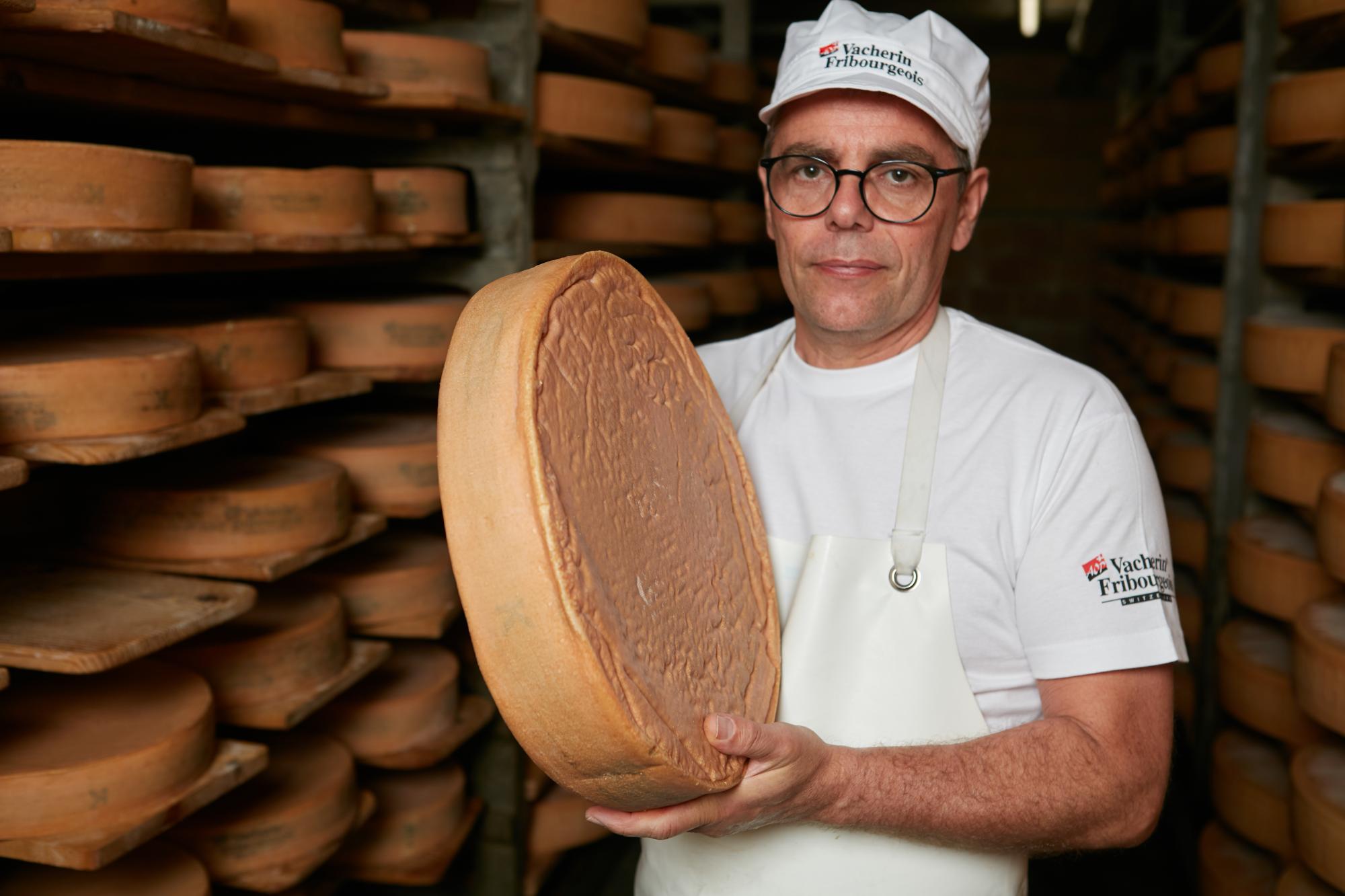
Grandvillard cheese dairy
The architecture of Grandvillard, which dates predominately from the 17th to 19th century, bears witness to the major contribution that cheesemaking made to the local alpine economy. Today, this remarkable stone and timber architectural ensemble is now classified as a heritage site of national importance. It is also the last remaining vestige of a now-extinct alpine civilisation that owed its existence to the production and sale of cheese. The village, however, continues to uphold this age-old tradition. The current dairy was built in the 1930s and has since undergone renovation work, first in 2001 and later in 2010. Master cheesemaker Laurent Python uses milk from cows which graze on pastures perched at an altitude of between 750 and 1,500 metres to make his Gruyère AOP. The village’s 12 dairy farmers deliver a daily supply of milk that meets the most exacting quality standards. The annual milk yield of 1,800,000 kg is transformed into some 4,500 wheels of Gruyère AOP, as well as double cream and sérac (whey cheese). Laurent Python also makes Vacherin fribourgeois AOP; it took gold at the 2018 Swiss Cheese Award. As well as cheesemaking facilities and ripening cellars, Grandvillard boasts a cheese shop and restaurant, le Pic Vert.
© Auberge de Lessoc
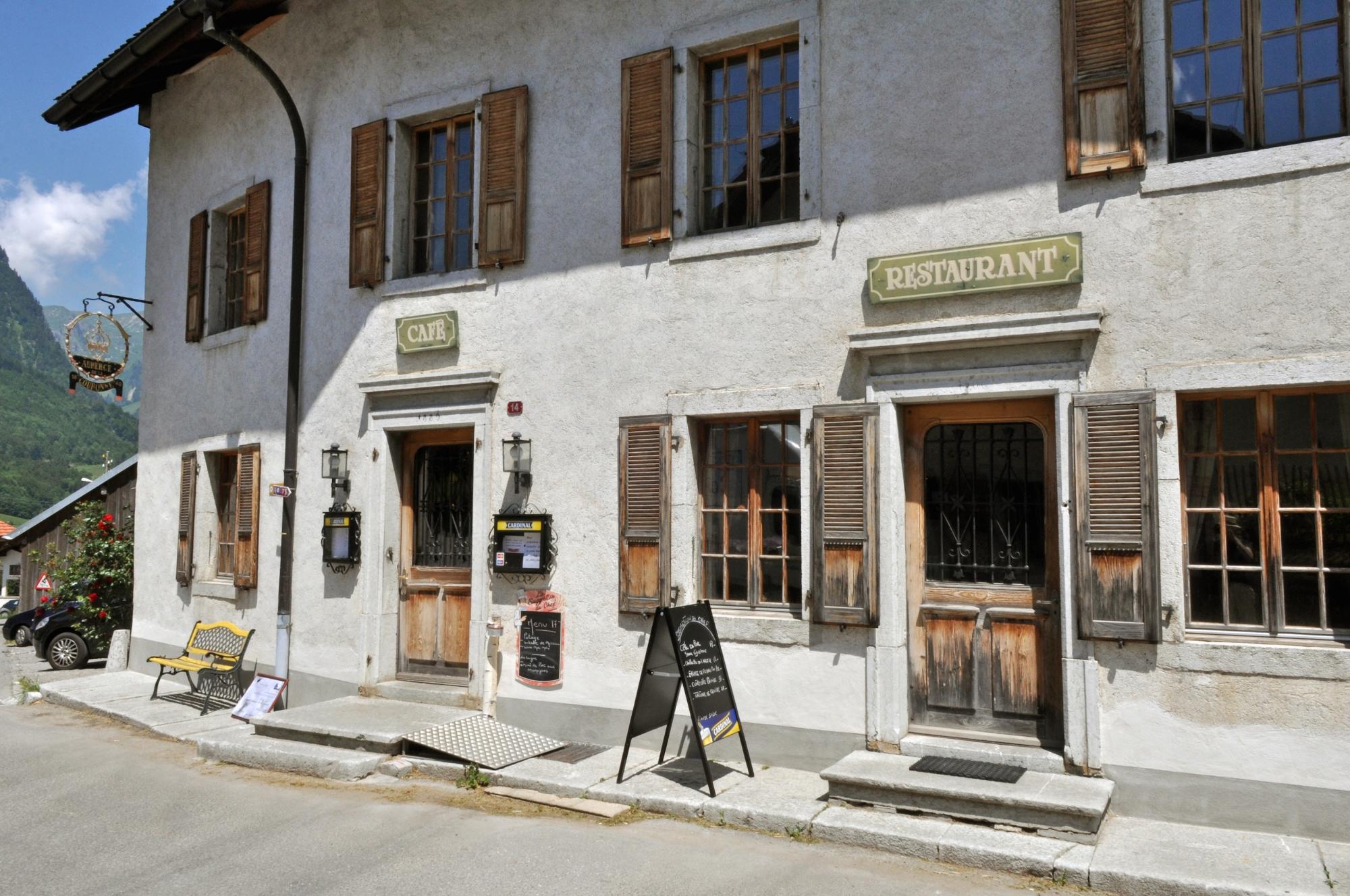
Lessoc
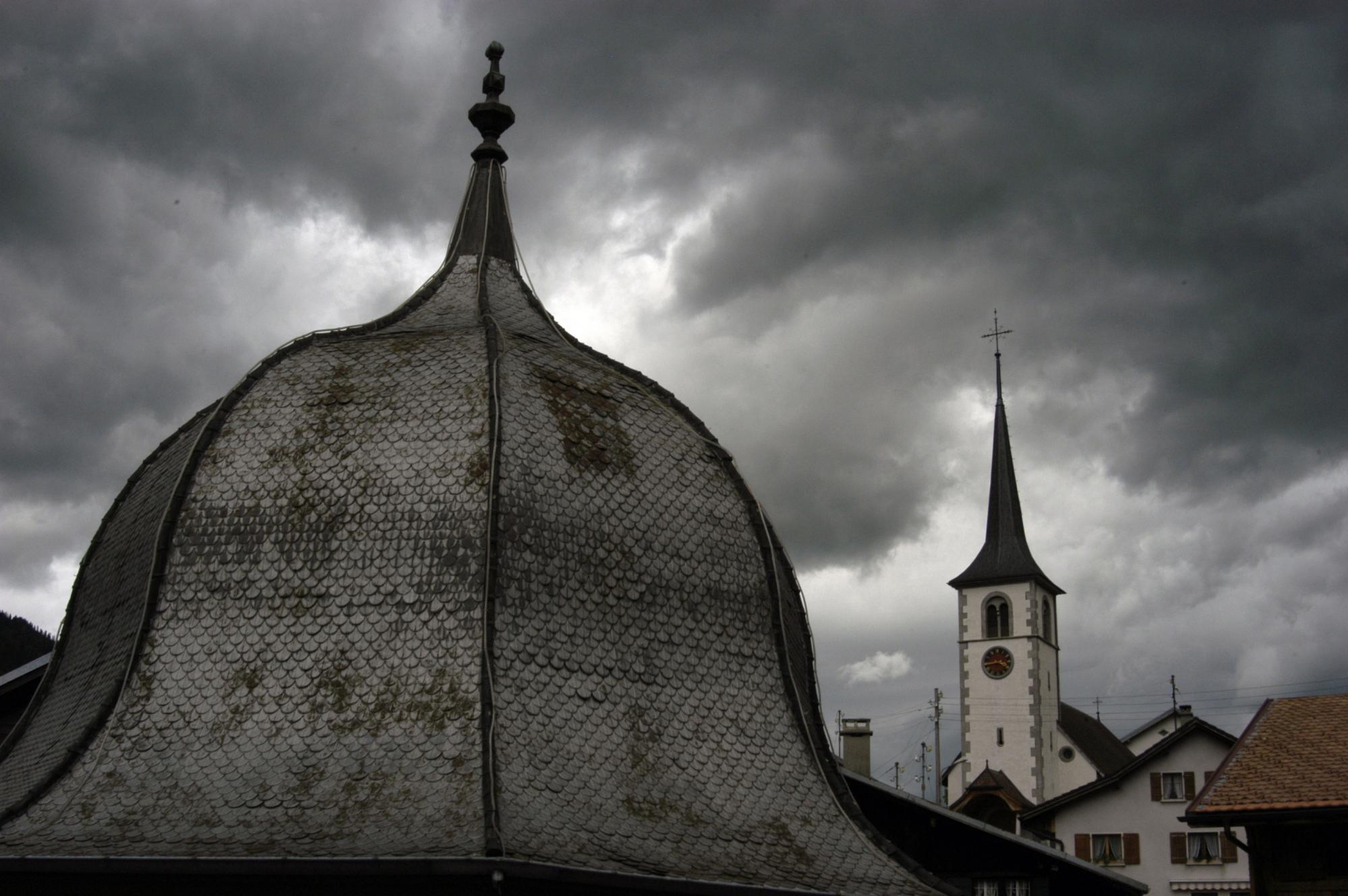
The village of Lessoc is in the federal inventory of sites of national importance. It is made up of a dense network of houses and farms from the golden age of Gruyère, with strong presence of late gothic decor (window and door frames) modeled after those of the medieval city of Gruyères. It is one of the rare villages in the l’Intyamon to have a square with a remarkable covered fountain.
© Parc naturel Gruyère Pays-d'Enhaut
Lessoc Fountain
The fountain consists of an octagonal limestone basin with a central pillar holding an obelisk. It was built in 1796 by the mason, Jacques Vicarino and the blacksmith, Noé Both. Its eight-sided dome is said to be in imperial style. It was a gift from a wealthy inhabitant of Lessoc, Louis Zurich who earned his riches in the cheese market. Here is the famous legend of Lessoc Fountain: Good Colin loved his birth-village of Lessoc. In fact he loved it so much that he rarely ventured too far from his homeland. His favorite part was the lovely village fountain where cows came to drink, morning and evening; and where women came together to wash their clothing, just as well-versed in bleaching whites as discussing town gossip. One day, as the women did the washing, Colin passed by with his horse and cart, on his way to the fair in a neighboring village. Colin sold two fine pigs and a black and white cow before heading home, with a smile on his lips and his wallet swollen in his pocket.

© Montbovon
Montbovon
Cited as early as 1255, Montbovon has long been a busy crossroads. Located along the Sarine, it is the junction of the roads of three worlds: the Gruyère, the Pays-d’Enhaut, and the Lake Geneva basin. This crossroads is also emphasized by the meeting of two railroads: Montreux Oberland Bernois (1903) and Transports Fribourgeois (1904), which brought modernity into these valleys.